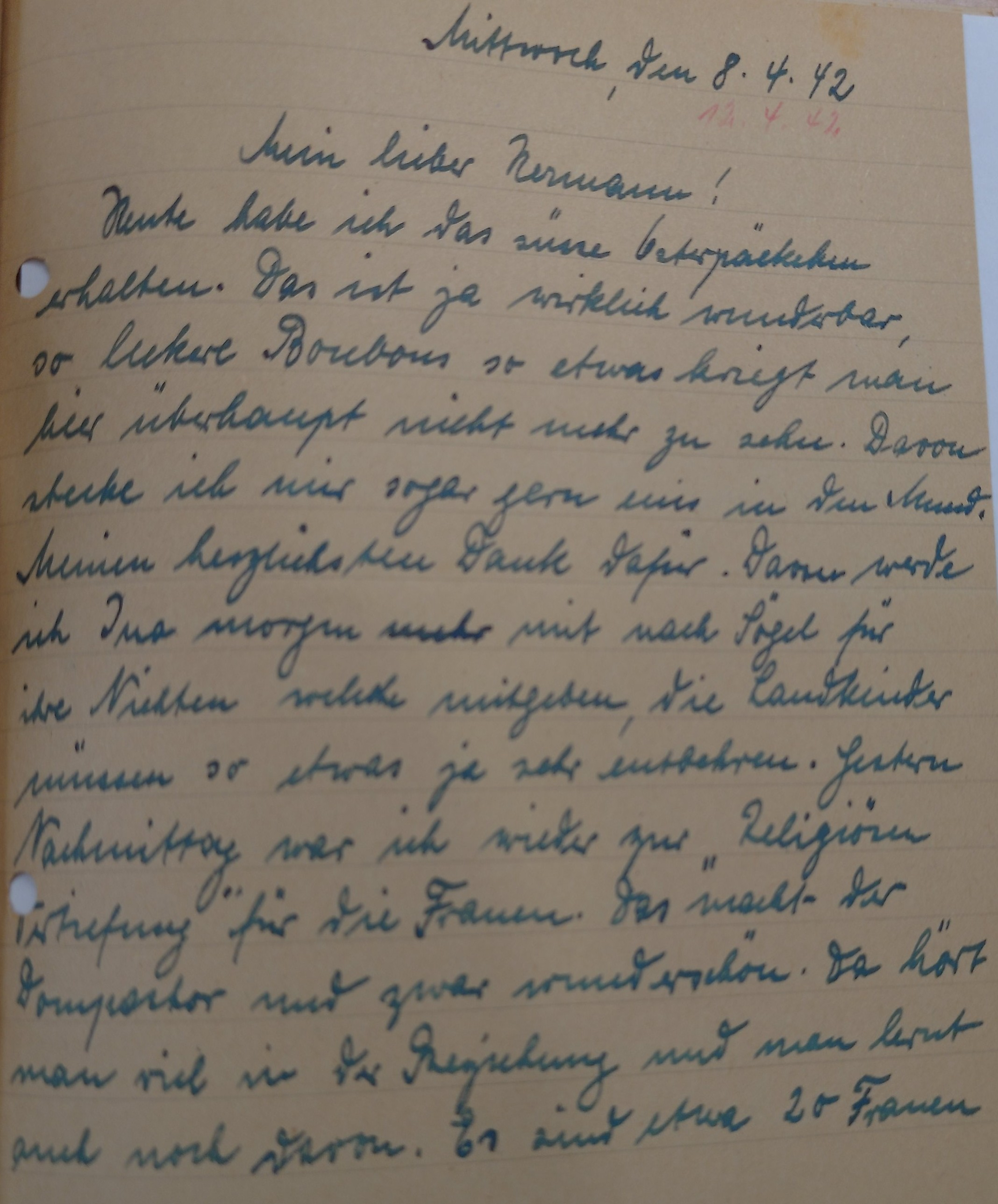
Using the convolut NLA OS Slg. 55 Nr. 7
There appears to be contradicting statements concerning the entropy of field post letters. On one hand they have been the center of plenty research in fields such as Alltagsgeschichte (every day history) and literary studies. On the other hand, scholars such as Berghan (1969) and Fussell (1989) were outspoken critics of using field post letters for research. Fussel described them as merely serving the purpose of sending signs of life to loved ones. This hints at field post letters being formulaic and redundant. Using Entropy analysis on the convolut NLA OS Slg. 55 Nr. 7 the question of entropy will be answered.
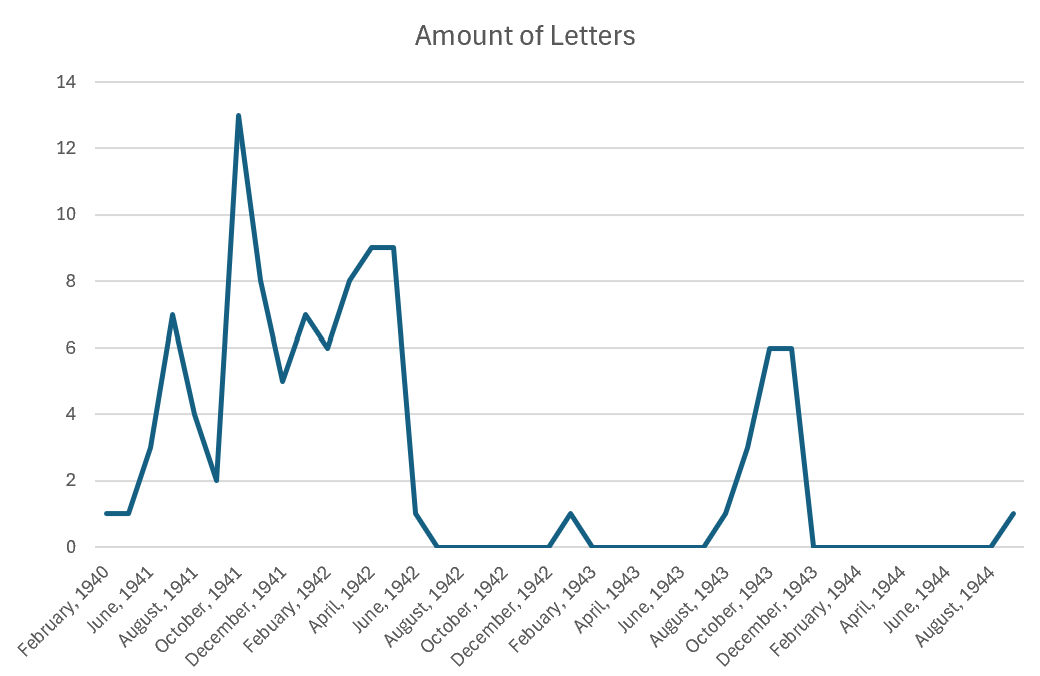
The full data is in datenentropy.csv.
| Item | Value |
|---|---|
| Entropy | 1.750 bits per symbol |
| Character Entropy | 4.19 bits |
| Redundancy | 15 % |
The entropy analysis indicates that German field post letters are neither purely formulaic nor highly random. The measured redundancy of only 15% suggests that, although conventional linguistic patterns are present, the letters still convey a substantial amount of new information. Consequently, they should be regarded as meaningful historical sources rather than predominantly repetitive communications.
- Berghan, V.R. (1969). NSDAP und „Geistige Führung“ der Wehrmacht 1939-1943. in: Vjh. f. Zeitgeschichte 17. Jg.
- Fussels, Paul (1989). Wartime – Understanding and Behaviour in the Second World War. Oxford University Press
- Niedersächsisches Landesarchiv Osnabbrück. Slg. 55 Nr. 7 102 Feldpostbriefe von Maria Hiltermann an ihren Ehemann, den Osnabrücker Gastwirt Hermann Hiltermann